


"Here’s the secret: get clear on your motivations, take the authority you need to make a stand, and build momentum to create change. . . . Never underestimate the power we each hold to create phenomenal change."
Fleet Maull, Heart Mind Institute
Fleet Maull, PhD, is an author, meditation teacher, and social entrepreneur known for his leadership in mindfulness, socially engaged Buddhism, and criminal justice reform. He founded several organizations including the Heart Mind Institute, Prison Mindfulness Institute, National Prison Hospice Association, and co-founded major training programs such as the Engaged Mindfulness Institute and Center for Mindfulness in Public Safety. He is a Zen Roshi (Zen master) and senior Zen priest in the Soto Zen lineage of Bernie Glassman Roshi and Maezumi Roshi. He is also a 50+ year practitioner and senior Dharma teacher in the Tibetan Vajrayana tradition. He developed neuro-somatic mindfulness (NSM) meditation, a deeply embodied and trauma-informed integration of classic meditation techniques like mahamudra, dzogchen, and shikantaza and various inner yoga practices with network neuroscience and biofield science.
Dr. Maull is a sought-after keynote speaker on mindfulness, trauma-informed care, end-of-life care, and criminal justice, and he has authored three influential books: Radical Responsibility, Dharma in Hell, and the Mindful C.O. He teaches and leads retreats worldwide and has trained executives, correctional officers, law enforcement, and public safety personnel across the United States and Canada.
Q: You’ve done an extraordinary amount of meaningful work in the world. As you reflect on your journey, what stands out? How did you find your way to this path?
Fleet Maull (FM): I’ve always been a spiritual seeker. Even as a child, I was fascinated by the mind. In 1966, during my sophomore year of high school, I discovered Buddhism. That was fairly typical for someone immersed in the counterculture of the time, but it struck a deep chord in me. My early years were marked by personal and family struggles, including alcoholism, and I found myself questioning the culture and values I was raised in.
Eventually, I became immersed in Tibetan Buddhist practice. But alongside that, I lived what I now recognize as a shadow life. In my twenties and early thirties, I was living as an expatriate in South America, disillusioned with U.S. society and engaged in self-justified behavior—including small-scale drug smuggling. I would return to the States and engage in practice retreats with my teacher, then disappear again for months at a time. I was caught in deep cognitive dissonance and was self-medicating my inner turmoil. Eventually, I was arrested and sentenced to 30 years in federal prison. I had a nine-year-old son at the time, and thought I would be there until I was 65. That was my wake-up call. I knew I had to turn my life around and dedicate myself to doing something truly meaningful. I wanted to leave my son, Robert, a better legacy than just… “his dad went to prison or even died in prison,” as I was not sure that I would survive that time.
Fortunately, when my appeal went through after about two years of incarceration, my sentence was reduced to 25 years. With the good time allowed under the pre-1987 federal sentencing laws, that meant I would serve 14.5 years if I managed to stay out of trouble, which I did.
Q: How did your time in prison influence the direction of your work?
FM: I served my time at a maximum-security federal prison hospital in Springfield, Missouri, during the height of the AIDS crisis, 1985 to 1999. It was a devastating time—many men were dying in terrible conditions with minimal care and minimal pain management, isolated and without family. I became deeply involved in caregiving, and with another inmate, I helped establish the first prison hospice program in the United States in 1987.
We developed a rigorous training program for inmate volunteers, working with chaplains, psychologists, doctors, nurses, and hospice professionals from the local community to develop the foundations of a robust, replicable model. Over the years, we trained scores of prisoners to provide not just physical care, but comprehensive, meaningful psychospiritual support for dying prisoners—essentially becoming surrogate family members. That work transformed me.
During this time, I also started teaching meditation in the chapel twice a week alongside my day job of teaching GED, English, and other adult learning programs to inmates in the prison school. I had a Master’s when I entered, and actually finished the majority of my PhD work while in prison!
Q: How has that initial hospice work rippled out to have even greater impact?
FM: I founded the nonprofit National Prison Hospice Association (NPHA) in 1991. Through NPHA, the model for prison-based hospice care that was developed in that federal prison hospital became a national standard. By the time I was released in 1999, 70 to 75 hospice programs had been established in state and federal prisons throughout the United States. We worked closely with both prison staff and community hospice organizations to build sustainable programs, often in response to direct outreach from incarcerated individuals. Our efforts were recognized and supported by organizations like the National Hospice and Palliative Care Organization and the Open Society Institute. One of the most impactful outcomes was setting national hospice standards for correctional facilities through the National Commission on Health Care in Corrections and the U.S. Public Health Service, aligning them with community healthcare standards. I’m now working to revive the National Prison Hospice Association, which has lacked funding and staffing in recent years, and am committed to breathing new life into this work.
Q: Wow, that’s incredibly inspiring and certainly not the story of prison that we often hear. How did your work in the meditation and mindfulness spaces build during the time you were incarcerated?
FM: While I was incarcerated, I started two nonprofit organizations. The first was the National Prison Hospice Association (NPHA), and the second was oriented around meditation and spiritual practice. In 1989, I founded Prison Dharma Network—which now has three divisions including the Prison Mindfulness Institute—as a way to support incarcerated people who were exploring Buddhist practice. While in prison, I wrote for Yoga Journal and Shambhala Sun, and soon began receiving letters from other prisoners curious to delve deeper. With help from friends on the outside, we launched a mail-based program that sent books and matched incarcerated folks with pen pals. Eventually, with the help of a friend who was the VP of Shambala Publications, we expanded our book ministry. We operated on a shoestring budget for a few years to get off the ground, and have grown exponentially since then.
Q: What are you focused on today through the Prison Mindfulness Institute?
FM: A major focus is the Path of Freedom (POF), our flagship mindfulness-based emotional intelligence curriculum for incarcerated individuals. We’ve trained over 1,500 volunteers to deliver it in jails, prisons, and juvenile detention centers around the world. Before the pandemic, we had active programs in 21 U.S. states and seven countries led by trainees of our program. We also distribute Path of Freedom books and facilitator guides widely.
Today, we are based in Deerfield, Massachusetts, and operate a robust program for the Rhode Island Department of Corrections and many other in-person offerings.
A huge turning point came when we partnered with secure tablet vendors like Edovo. We developed a digital version of Path of Freedom that’s now available in many prison systems. Over 150,000 prisoners have enrolled with extraordinarily high course completion rates. It is one of the most popular courses they’ve ever offered, and we have since developed many more courses for the Edovo platform. This opportunity has allowed us to scale in ways we couldn’t have imagined. We have different iterations of the original POF program that feature specific topics like conflict management, relapse prevention, addiction, women’s issues, and more.
Q: Can you tell us about the research and impact behind the Path of Freedom program?
FM: The Path of Freedom program integrates cognitive behavioral therapy (CBT) and mindfulness-based emotional intelligence grounded in strong evidence-based principles. We’ve seen powerful results, both anecdotally and through formal research. In Rhode Island, we partnered with Brown University and Rhode Island General Hospital to conduct pilot studies. One involved delivering Path of Freedom in the final three months before release and tracking outcomes afterward. Participants had significantly fewer positive drug screens and parole violations compared to those who didn’t go through the program.
While large-scale, biomarker-based studies are expensive and complex, we’ve gathered compelling qualitative data and consistent reports of transformation—reduced aggression, increased emotional regulation, greater self-awareness.
Q: That’s certainly inspiring. I’d love to hear a bit more about the Engaged Mindfulness Institute and how you bring your teachings and ethos to a wider audience.
FM: The Engaged Mindfulness Institute, another division of Prison Dharma Network, offers a year-long, trauma-informed, mindfulness teacher training program for those working with marginalized populations—people impacted by incarceration, addiction, homelessness, and systemic oppression.
The training is trauma-informed, neuroscience-based, and deeply embodied. The first six months focus on foundational learning, followed by six months of supervised practice teaching. I believe it’s one of the most rigorous and comprehensive programs in the country, especially compared to some of the lighter, more surface-level offerings out there. It includes online coursework, in-person retreats, small group work, and practice teaching. We currently train about 20 participants per cohort, and we are now enrolling our fifteenth cohort.
Q: You’re also doing important work with public safety professionals. Can you speak about that?
FM: Absolutely. Through the Center for Mindfulness in Public Safety, another division of Prison Dharma Network, we deliver our Mindfulness-Based Wellness and Resilience (MBWR) program to corrections and other public safety professionals. We’ve trained over 3,000 correctional officers, probation and parole staff, and behavioral health professionals. We’ve worked with the Oregon Department of Corrections, the Province of Ontario, sheriff departments in Los Angeles, Santa Clara, and Indianapolis, and even the U.S. Border Patrol.
We also published a book on the MBWR model for corrections professionals. Like any systems-level work, it has its challenges—pandemic disruptions, political shifts—but we’re committed to making these resources available. We’re currently reengaging with federal partners and hope to expand our efforts in the United States and Canada.
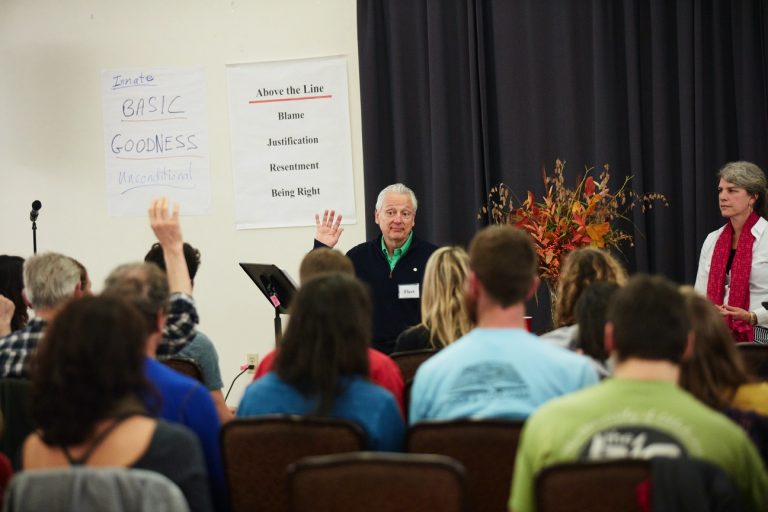
Fleet’s Heart Mind Institute programming empowers participants to heal trauma, shift limiting beliefs, and grow into their fullest, most heart-centered expression.
Q: One of your core teachings—and the name of your latest book—is radical responsibility. What does that mean in your work and life?
FM: Radical responsibility is about taking complete ownership of our lives—our thoughts, emotions, speech, and actions. It’s not about blaming others or ourselves for what happens to us, but about reclaiming the power we have in how we respond to adversity. This philosophy emerged from my own experience of taking full responsibility for the choices that led to my incarceration. That internal commitment became the bedrock of all my subsequent work as a teacher, coach, and leader.
Q: You’re a Zen Roshi and also trained in Tibetan traditions. How do mindfulness and yoga show up in your personal and professional life today?
FM: I’ve trained deeply in both Tibetan and Zen traditions and am a fully empowered Zen Roshi and senior Dharma teacher in the Tibetan tradition. For me, these practices are not just part of my life—they are the foundation of it. Over the past 50 years, this spiritual path has shaped every aspect of who I am and how I work. I honestly can’t imagine who I’d be without it.
While most of my teaching now is in a more secular context—especially through my work in prisons—it’s all deeply rooted in traditional contemplative training. I’ve explored a wide range of practices, from Vipassana to non-dual and neuroscience-based approaches, and I’ve worked to integrate ancient wisdom with modern understanding.
My current focus is what I call neuro-somatic mindfulness (NSM) meditation—a trauma-informed, neuroscience-grounded approach to meditation. It’s about targeting specific neural networks in the brain to support healing, emotional regulation, and self-actualization. I combine this with yogic science and body-mind practices like breathwork, visualization, emotional freedom technique/tapping, and embodied movement in what I call a “practice stack.” Personally, I do about an hour of this practice stack each morning, followed by 60 minutes of Vajrayana practice. It’s an ongoing experiment in integration and transformation.
I believe one of the reasons many people struggle to maintain a meditation practice is that the initial instruction doesn’t meet them where they are. My work is focused on changing that, offering practices that quickly lead to results: greater self-awareness, optimal nervous system regulation, and flow states that create significant shifts in neural architecture.
We’ve had over 12,000 people go through our NSM meditation courses, and we’re seeing new practitioners find it easier to get started, while more experienced ones are deepening and transforming their practice in powerful ways. The NSM approach is deeply embodied, interoceptive awareness-focused, and trauma-sensitive—designed to bring people into a more intimate relationship with their own healing, being, and capacity for awareness and awakening. It’s about making deep practice more accessible and effective, without needing to retreat to a cave.
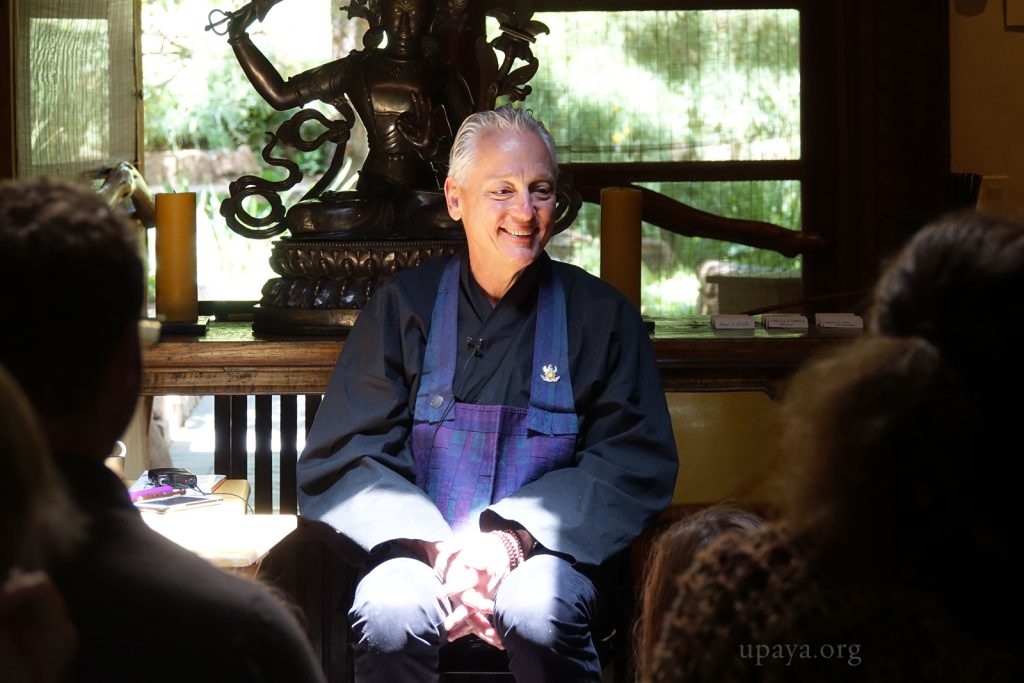
In 1994, Fleet began formal studies with Roshi Bernie Glassman, which eventually led to his ordination as a Zen peacemaker priest in a ceremony performed in the prison chapel by Roshi and his late wife, Sensei Jishu.
Q: You’ve reached a global audience through the Heart Mind Institute’s online summits. Can you tell us more about that aspect of your work?
FM: Through the Heart Mind Institute, we’ve reached over two million people with our free online summits. We bring together leading voices on topics ranging from psychedelics and trauma healing to climate anxiety and resilience. These summits are designed to be accessible, empowering, and deeply practical.
Our goal is to eventually reach a billion people. We want to support a global movement of embodied, self-aware individuals who are committed to healing, growth, and service.
We also offer more in-depth NSM courses that help people engage the five essential neural networks associated with emotional regulation, self-awareness, higher-order cognitive function, flow states, and awakening. It’s designed to support beginners and deepen the practice of advanced meditators alike.
Q: With all you’ve seen and experienced, what gives you hope in these often disheartening times?
FM: I consider myself a realistic optimist. Yes, we live in turbulent times, and the media often amplifies despair. But when you look at the data, there’s also immense progress—declining infant mortality, increased access to education and health care, and growing awareness around trauma and mental health. We are in a positive evolutionary cycle. Yes, we are up against climate change. Yes, there is political unrest. Yes, there is undue pain and suffering. But I do believe in humanity, and I believe we will find a way through.
Most importantly, I see lives transformed every day. I meet incarcerated individuals who’ve become teachers, leaders, and healers. I see public servants embracing mindfulness and emotional intelligence. These are signs of a deeper shift—a quiet revolution in consciousness. That gives me hope. Here’s the secret: get clear on your motivations, take the authority you need to make a stand, and build momentum to create change. I was an incarcerated man with arguably the least possible amount of agency and access to opportunity, and I was able to found two national organizations that have fundamentally altered the prison landscape. Never underestimate the power we each hold to create phenomenal change.
This interview is part of the Nova Institute for Health’s Insight Collaborative for Mental Well-Being project. The Insight Collaborative is supported by a generous seed grant from the Mental Insight Foundation.
Responses